What is it?
A cataract is progressive clouding of the crystalline lens, the eye's naturally transparent lens that helps focus light on the retina. As the lens loses transparency, light reaching the retina is scattered or partially blocked, affecting the quality of vision.
Common symptoms
Gradually worsening blurred or cloudy vision, increased glare sensitivity and difficulty driving at night because of headlight glare, faded color perception, and a need to change eyeglass prescriptions more often than usual.
How is it evaluated?
Evaluation takes place during consultation using a slit-lamp examination, which allows the doctor to assess the degree of lens clouding directly and its impact on the patient's visual function.
When may surgery be considered?
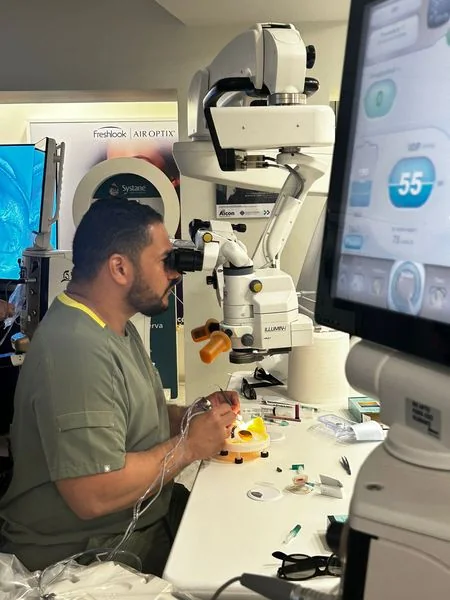
Not every cataract requires immediate surgery: adjusting the eyeglass prescription is often sufficient in the early stages. When clouding significantly affects daily activities, cataract surgery—removing the cloudy lens and replacing it with an intraocular lens—is the standard option. Both the decision to operate and the choice of lens (monofocal, toric or multifocal) require individual assessment; freedom from glasses or a specific outcome cannot be guaranteed before evaluation.
Initial evaluation takes place at the comprehensive ophthalmology locations listed below. If surgery is indicated, the location of the procedure is determined individually and is not specified on this page.
Where to receive an evaluation
You can use the WhatsApp buttons above, call directly or view our contact options.
General references
- American Academy of Ophthalmology (AAO / EyeWiki) — patient education resources
- National Eye Institute (NEI), U.S. National Institutes of Health — patient education resources